New profession · breakdown for creators
Content factory creator: what is this profession
A business doesn't need another pretty video. It needs a constant stream of content that helps stay on the audience's radar, test ideas, and generate leads.
That is why a new role is emerging for marketers, SMM specialists, and AI creators: rather than putting together every piece of content by hand, they set up a system for the business that regularly produces videos and posts. We call this system a content factory, and the professional who launches and optimizes it is a content factory creator.
Two facts that define it all
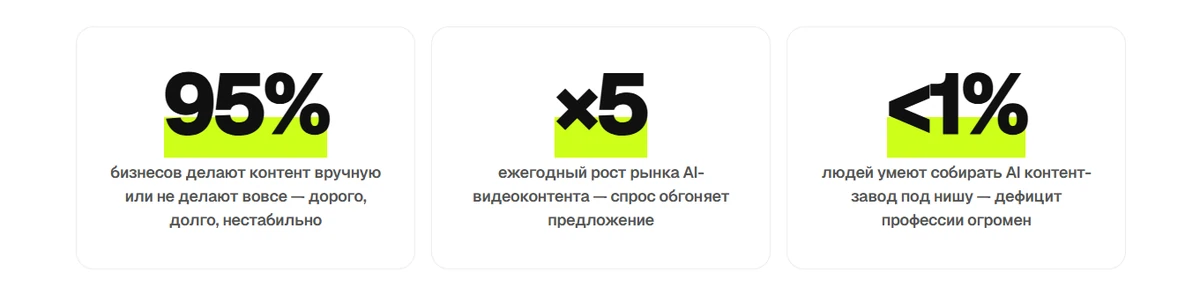
Content on social media remains one of the primary ways to promote a business. Through it, brands build awareness, explain product value, and receive inquiries.
Several verified hypotheses give a better chance of results than one. The more regularly a business releases content, the faster it understands which topics, formats, and offers work.
This is exactly where manual production hits a ceiling. Even a strong specialist is limited by time: they have to come up with a topic, write a script, create visuals, record voice-overs, edit, get approval, and publish the material. If the entire cycle is done manually, volume grows slowly, and the cost of each subsequent video barely drops.
The entrepreneur is not paying for the act of generation itself. They are paying for regularity, reach, traffic, and customers—in other words, for a manageable process.
What changes with a content factory
Content2Go takes over the production part: brainstorming, scripts, visuals, voice-over, editing, and publication. The creator sets up the logic for a specific business once, then manages it: changing topics, testing formats, and boosting what brings results.
Instead of selling a single video, a service more understandable for business emerges: launching and maintaining their own content process. The client receives not just random posts, but a pre-defined volume of materials tailored to their niche, audience, and brand.
Who is a content factory creator
This is a specialist who translates a business task into the language of a content system. They figure out what the company sells and to whom, select the appropriate format, set up the production content line, and monitor the results.
Their work is not about manually editing hundreds of videos. Their value lies in building the system correctly:
- understanding the client's niche, audience, and offer;
- choosing idea sources and suitable formats;
- defining the character look, voice, visual style, and brand rules;
- setting the volume, schedule, and publication platforms;
- reviewing analytics and improving effective combinations.
How a content factory is launched
- Choose a format for the client's task.
This could be a UGC-host, an AI-avatar, a creative report, an AI-series, processing, or another format from the catalog.
- Configure the content line.
Specify the niche, idea sources, character, voice, visual style, product information, and rules that cannot be violated.
- Set the volume and schedule.
Determine how much material to produce, how often to approve it, and which social networks to publish to.
- Launch and optimize.
The system produces content according to the set logic, while the creator tracks audience reactions, replaces weak topics, and scales strong ones.
How it works for others
The Content2Go case study page contains launches with real tasks, production volumes, and results. Here are three examples:
- Credit broker: AI series from a zero account →5 videos, 16 inquiries and 6 clients according to the case study.
- Psychologist: a stream of videos with an AI avatar →20 videos, over 1.2 million views and 500 leads, according to the case study.
- Clothing store: UGC for promoting leftovers →30 videos, over 600 thousand views and 80% of leftover sold according to the case study.
These are specific results from individual projects, not a promise of income or a guarantee of replication. The outcome depends on the niche, offer, budget, and the quality of the business's work.

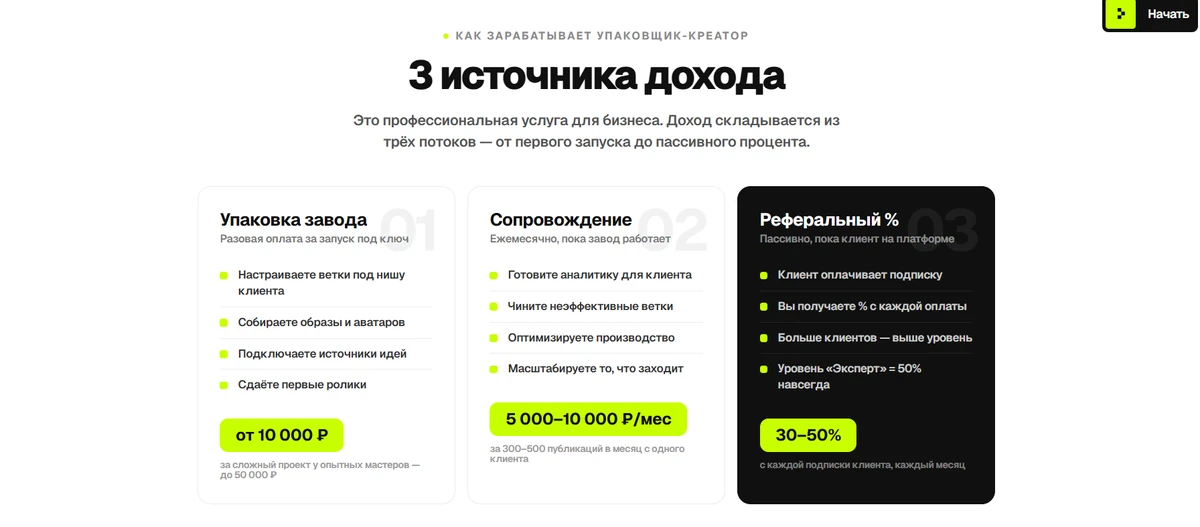
How a creator earns money
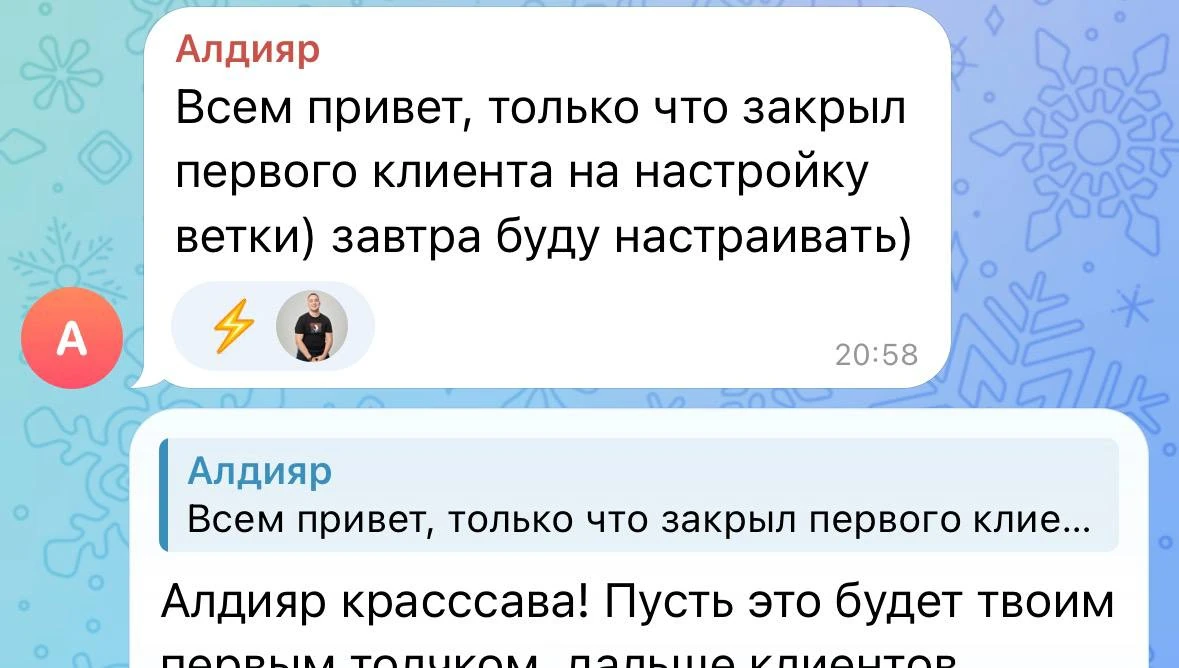
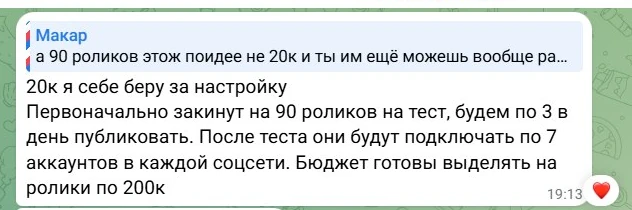
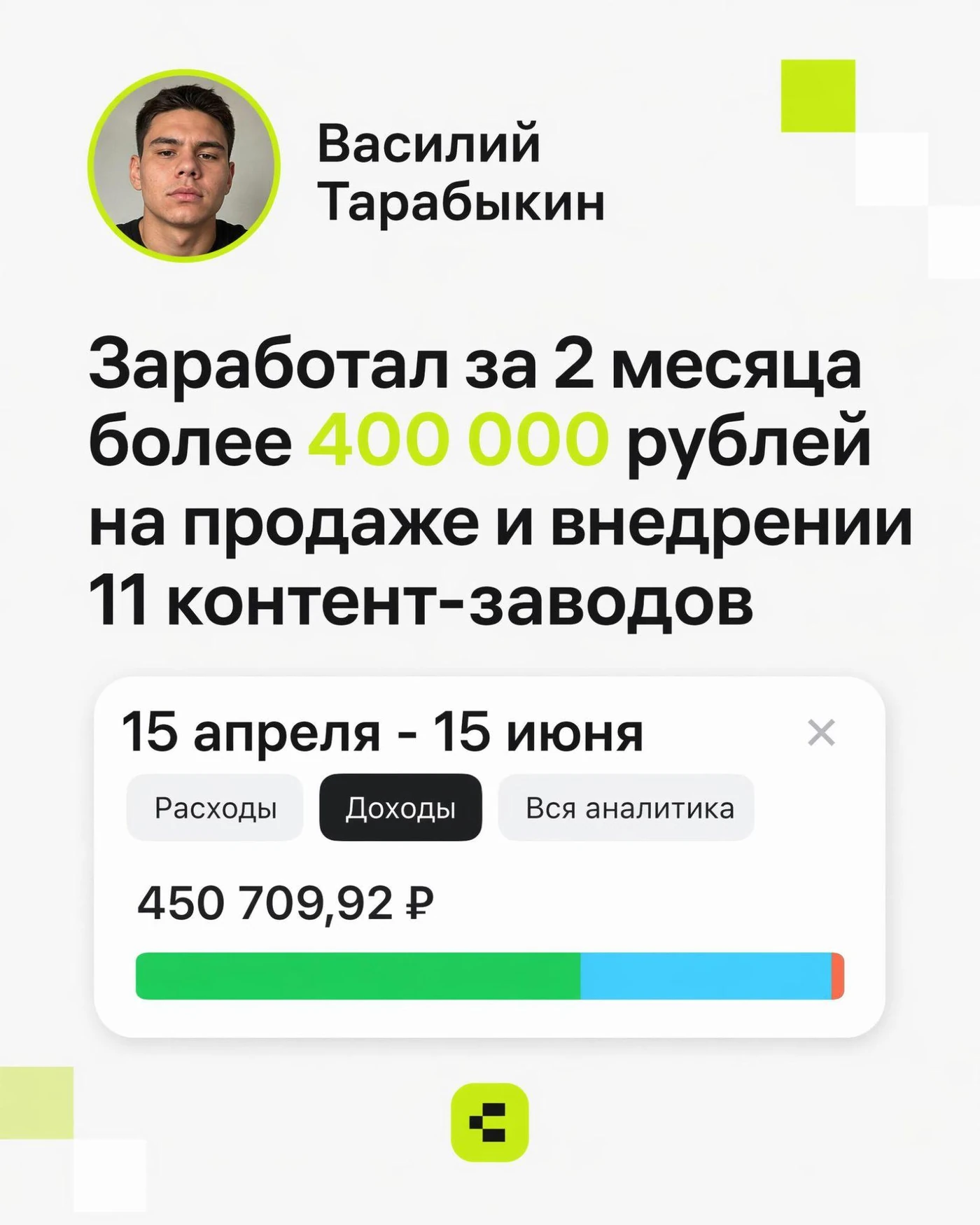
At launch. The creator conducts a briefing, selects formats, assembles the first content lines and hands over the ready production system to the client.
On support. After launch, you need to look at analytics, update topics, test new bundles and prepare a clear report for the client. This is a regular service, not a one-time editing task.
On the affiliate program. If the client continues to use the platform, the creator can receive affiliate remuneration according to the current terms of the program.
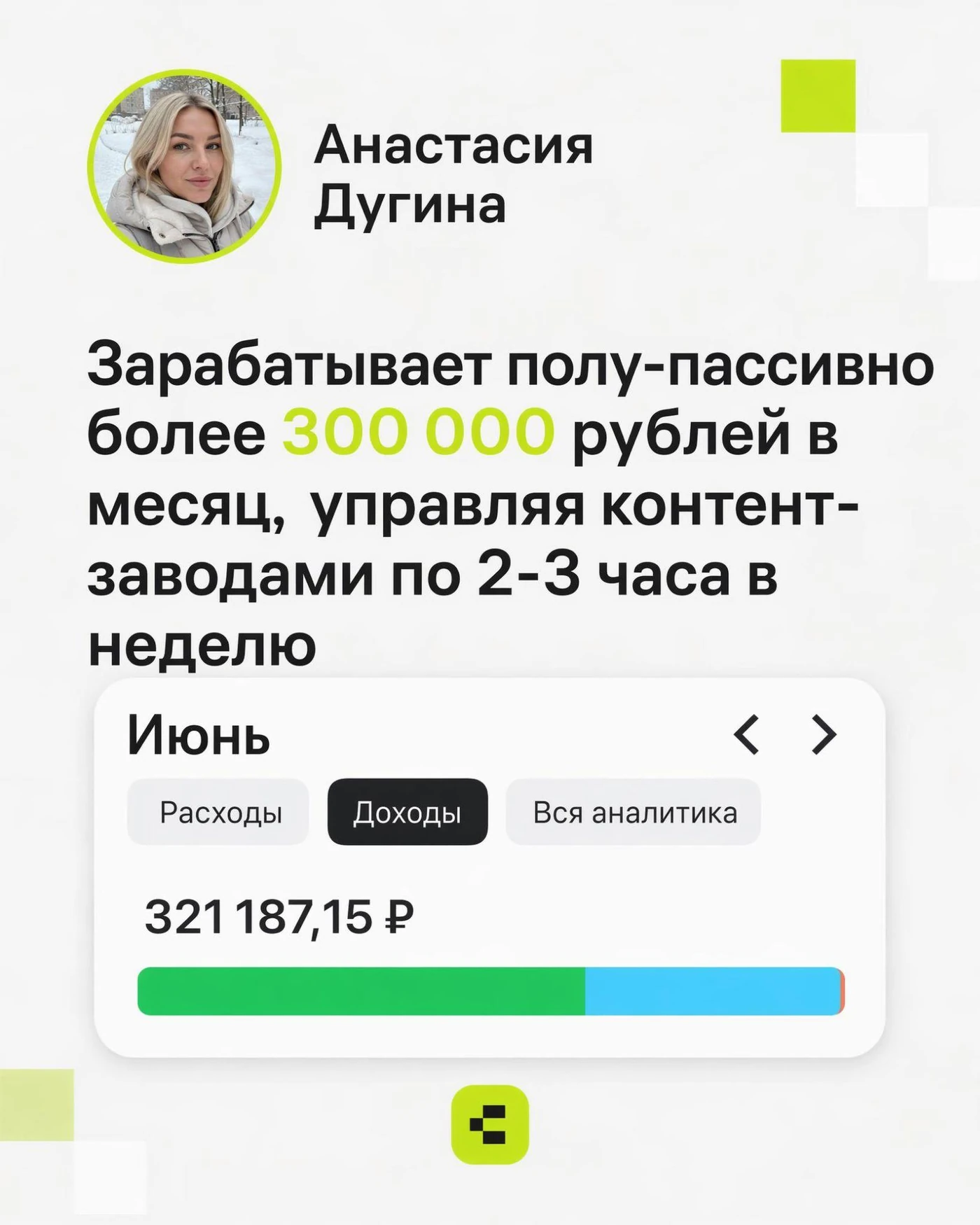
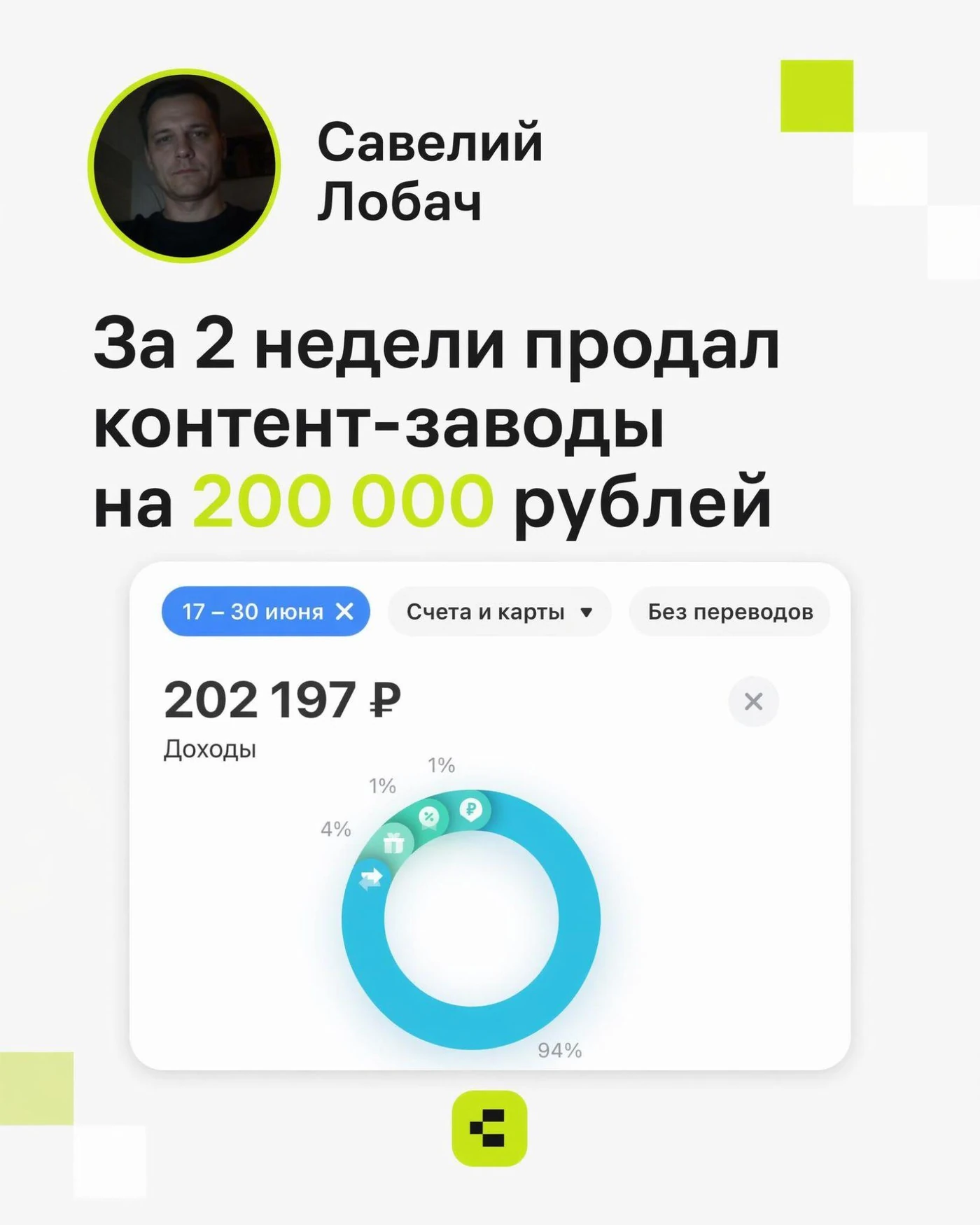
If you already work in marketing, SMM, or AI-production, you can add the content factory to your current services. If starting from scratch, it is better to choose one familiar niche and repeat a ready-made launch following the instructions, without trying to cover everything at once.
Who is this profession for
- For a marketer or SMM specialist — to increase production volume without expanding the team for each client.
- For an AI creator — to move from individual generations to a comprehensive service for business.
- For an agency or producer — to standardize production and run more projects.
- For a beginner — to master the process on ready-made reviews and start with one simple content line.
Where to start: the correct order
Do not open all materials at once. Follow the path sequentially:
- Watch the introductory video about the profession.
- Go through the guides page from the very beginning, without skipping basic settings.
- Choose one familiar market in the "Niche Launches" playlist.
- Analyze several mechanics in the "Format Launches" playlist.
- Assemble the first test content line and ask questions in the The English-speaking creator community is not available yet..
Open the first guide → The English-speaking creator community is not available yet.
Short and sweet
Do you need to know how to code?
No. It is more important to understand the business task, the audience, the offer, and content rules. The technical production chain is already built into the platform.
Can you start without experience in marketing?
Yes, if you start with one familiar niche, follow the guides in order, and first build a small test launch.
Does the content factory work completely without a person?
It automates production and publication. A person is still responsible for defining the task, the quality of initial settings, brand control, and improving results.